
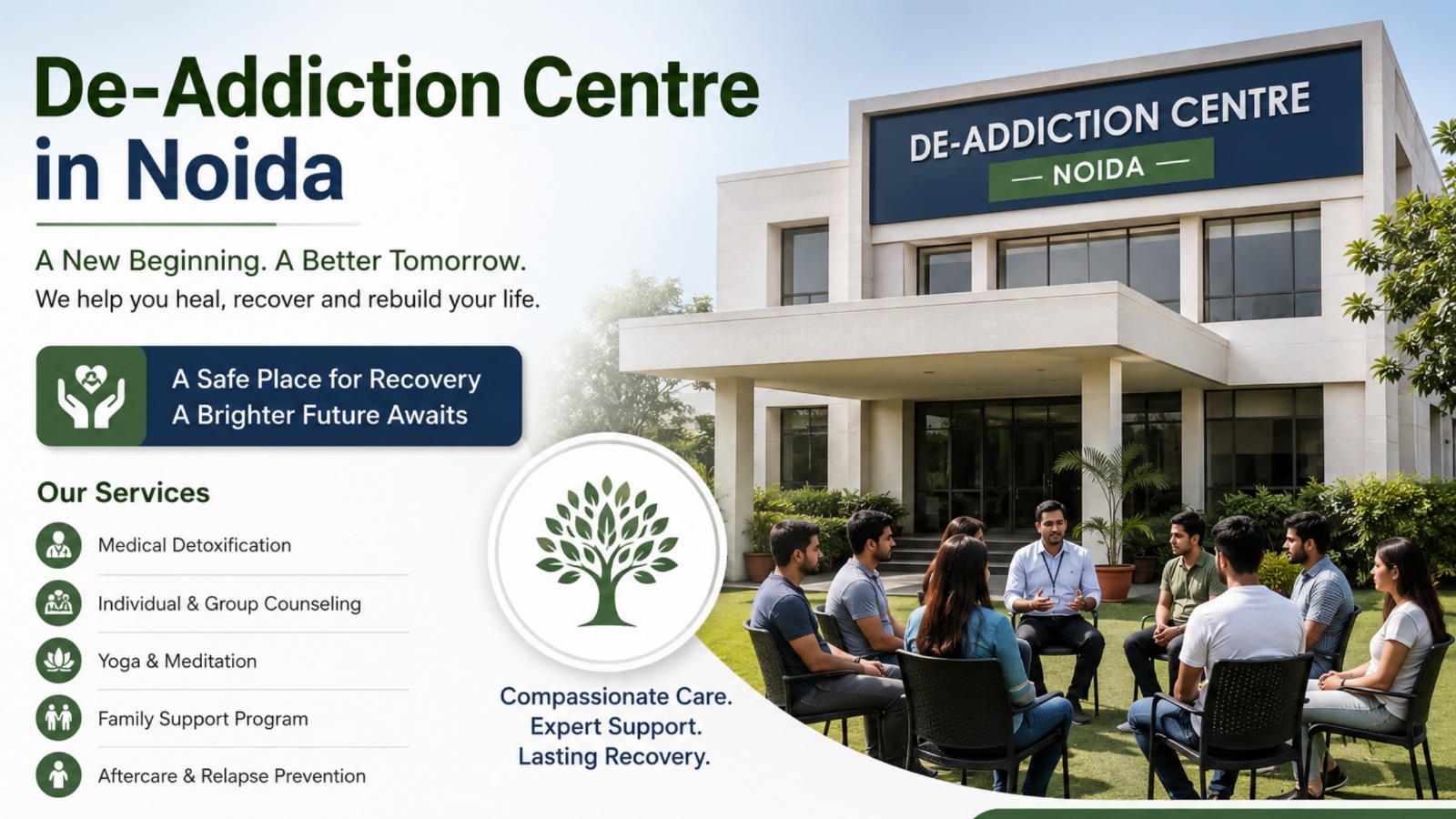
A De-Addiction Centre in Noida provides structured support to individuals struggling with alcohol, drugs or other forms of substance dependence. The focus is not limited to stopping substance use. Our recovery-oriented approach helps individuals understand their triggers, develop healthier coping skills, rebuild relationships and prepare for a more stable life.
Addiction can affect physical health, emotional well-being, employment, finances and family relationships. However, it is a treatable condition. With timely professional support, a suitable treatment plan and continued family involvement, recovery is possible.
If you or someone in your family is finding it difficult to control substance use, seeking professional guidance can be an important first step.
A de-addiction centre is a structured treatment facility that supports people affected by substance dependence. Depending on the individual’s condition, treatment may involve medical assessment, supervised withdrawal management, counselling, behavioural therapies, family sessions, relapse-prevention planning and rehabilitation activities.
The purpose of treatment is to address both substance use and the underlying issues that may be contributing to it, such as:
Stress and workplace pressure
Family or relationship conflicts
Anxiety, low mood or emotional distress
Peer influence and social environment
Trauma or unresolved personal experiences
Poor sleep and unhealthy routines
Lack of coping or problem-solving skills
At Simran Shri, each individual is treated with respect, confidentiality and compassion. The treatment plan should be based on professional assessment rather than a standard programme being applied to everyone.
Substance dependence does not always begin with obvious or severe symptoms. It may develop gradually, making it difficult for the person and family to recognise when professional intervention is needed.
You should consider contacting a De-Addiction Centre in Noida if the individual:
Cannot reduce or stop alcohol or drug use despite trying
Experiences strong cravings or repeated loss of control
Requires a larger quantity of a substance to feel the same effect
Develops withdrawal symptoms when the substance is stopped
Neglects work, education or family responsibilities
Frequently lies about the amount or frequency of substance use
Becomes aggressive, isolated, anxious or unusually secretive
Continues using despite health, financial or relationship problems
Returns to substance use after repeated attempts to quit
Engages in unsafe behaviour while intoxicated
Withdrawal from certain substances can be medically serious. A person should not suddenly stop heavy or prolonged substance use without appropriate medical advice.
Simran Shri provides structured recovery support for individuals experiencing different forms of substance dependence. The exact programme depends on the substance involved, duration of use, withdrawal history, physical health and psychological condition.
Alcohol dependence may affect the liver, sleep, appetite, concentration, mood and relationships. Treatment may include withdrawal assessment, counselling, craving-management strategies, family involvement and relapse-prevention planning.
Dependence on opioids, cannabis, cocaine, stimulants or other drugs can produce significant behavioural and health-related consequences. Professional treatment helps identify the pattern of use and build a personalised recovery plan.
Sleeping pills, pain medicines and anti-anxiety medications can also become habit-forming when used without suitable medical supervision. Treatment must be carefully planned because abruptly stopping some medicines can cause withdrawal complications.
Some individuals regularly use more than one substance, such as alcohol with sleeping tablets or opioids with other drugs. These cases require a detailed assessment so that treatment risks and recovery needs can be managed appropriately.
A reliable De-Addiction Centre in Noida should follow a clear and personalised treatment process. Although treatment differs from person to person, it commonly includes the following stages.
The process begins with understanding the person’s substance-use history, physical condition, emotional health, family situation and previous recovery attempts. This assessment helps determine whether residential, outpatient or another form of support may be suitable.
Detoxification allows the body to clear the substance while withdrawal symptoms are monitored. The type and intensity of support depend on the substance and level of dependence. Detox alone is not a complete addiction treatment; it should be followed by counselling and rehabilitation.
One-to-one counselling helps individuals discuss personal challenges in a private setting. Sessions may explore triggers, denial, stress, relationships, motivation and behaviour patterns that contribute to substance use.
Structured group sessions allow participants to learn from shared experiences, practise communication and understand that they are not facing recovery alone. Group support can also encourage responsibility and consistency.
Evidence-informed approaches such as cognitive behavioural strategies may help individuals recognise unhelpful thoughts, manage cravings and respond differently to high-risk situations. Therapy should be selected according to individual clinical needs.
Addiction affects the entire family. Family sessions can improve communication, clarify healthy boundaries and help relatives understand how to support recovery without unintentionally enabling substance use.
Before returning to everyday life, individuals need a practical plan for managing triggers. This may include follow-up counselling, support meetings, healthy routines, emergency contacts and strategies for handling cravings.
Simran Shri aims to create a respectful and recovery-focused environment where individuals can work on their physical, emotional and behavioural well-being.
Our approach is centred on:
Personalised recovery planning
Confidential and non-judgmental support
Individual and group counselling
Family education and participation
Healthy daily routines
Trigger and craving management
Emotional and behavioural rehabilitation
Relapse-prevention preparation
Continued recovery guidance
No ethical centre should promise a guaranteed or instant cure. Recovery is a gradual process influenced by the individual’s health, motivation, treatment participation, family support and willingness to maintain healthy changes after completing the programme.
Not every individual requires the same level of care.
Residential treatment may be considered when:
Substance use is frequent or severe
The home environment contains strong triggers
Previous attempts to stop have been unsuccessful
Continuous structure and supervision are required
The individual needs distance from substance-using peers
Family members cannot safely manage the situation at home
Outpatient support may be suitable for individuals who have a stable home environment, manageable symptoms and the ability to attend scheduled sessions consistently.
The appropriate option should be selected after professional assessment. Choosing solely on the basis of convenience or price may not address the person’s actual treatment needs.
Families often experience fear, frustration, guilt and confusion when a loved one is affected by addiction. They may not know whether to confront the person, arrange an intervention or wait for them to ask for help.
Simran Shri helps families understand:
How addiction changes behaviour and decision-making
How to communicate without constant blame or conflict
Why threats and repeated arguments may not produce change
How to set clear and healthy boundaries
How to respond to manipulation or denial
How to participate constructively in treatment
What warning signs may indicate a possible relapse
Family members also need emotional support. They should not feel responsible for controlling every decision made by the person experiencing addiction.
Before admitting a loved one, ask the centre clear questions about its services and treatment practices.
Check whether the centre provides:
A proper assessment before recommending admission
Qualified professionals appropriate to the treatment offered
A personalised treatment plan
Safe procedures for managing withdrawal
Individual counselling and family sessions
A structured daily routine
Transparent information about programme duration and charges
Respectful and ethical patient care
Relapse-prevention and follow-up support
Clear policies regarding confidentiality and family communication
Avoid choosing a centre solely because it advertises a “100% success rate” or “permanent cure.” Addiction recovery cannot be responsibly guaranteed.
Simran Shri’s recovery support can be considered by individuals and families from Noida, Greater Noida and other parts of Delhi NCR. People searching for a Nasha Mukti Kendra in Noida are often looking for the same essential services: structured treatment, counselling, family guidance and continued relapse-prevention support.
Families outside Noida may also explore suitable care through a Nasha Mukti Kendra in Delhi NCR or a De-Addiction Centre, depending on accessibility and the level of support required.
Waiting for the problem to become severe can increase health, financial and relationship-related consequences. If substance use is becoming difficult to control, an early and confidential conversation can help the family understand the available options.
Contact Simran Shri to discuss the situation, understand the possible treatment process and determine an appropriate next step. Seeking help is not a sign of weakness—it is the beginning of informed and responsible recovery.
A suitable Nasha Mukti Kendra in Faridabad should provide professional assessment, individualised care, counselling, family involvement and relapse-prevention support. Families should evaluate the centre’s treatment approach, staff credentials, safety practices and aftercare before deciding.
The duration depends on the substance involved, severity of dependence, health condition and progress during treatment. Some people require several weeks of structured care, while others may benefit from longer rehabilitation and continued follow-up.
No. Detoxification primarily helps manage withdrawal and clear the substance from the body. Long-term recovery usually requires counselling, behavioural change, family support and relapse-prevention planning.
The family can first speak confidentially with a recovery professional and discuss safe intervention options. Treatment should follow applicable consent, legal and clinical requirements. Families should avoid using threats, violence or unsafe restraint.
A responsible centre should protect the individual’s privacy and clearly explain its confidentiality policy. Families may ask how medical information, counselling records and admission details are managed.
Relapse does not automatically mean that treatment has failed. It indicates that the recovery plan needs to be reviewed. The person should reconnect with the treatment team, identify what triggered the return to substance use and obtain further support promptly.
Family participation can make the home environment more supportive and help reduce conflict, confusion and enabling behaviour. The extent of involvement should be determined according to the individual’s situation and treatment plan.
Suddenly stopping some substances after prolonged or heavy use can cause serious withdrawal symptoms. Medical advice should be obtained before attempting unsupervised withdrawal at home.
Tags: drug addiction recovery